Why Your Neck Pain Keeps Coming Back (And What Finally Broke the Cycle)
I Was Managing My Neck Instead of Living My Life. Here's What Changed.
From an over-the-door traction routine to five minutes a day — the shift that finally stuck.
The Meeting I Couldn't Focus In
I was forty minutes into a client call, half-listening, half-thinking about the same spot at the base of my skull that had been tight since Tuesday. I rolled my shoulders. Pressed my thumb into it under the desk. Tilted my head one way, then the other, trying to find the angle that made it stop.
It didn't stop. It never really does.
Here's the part that got to me: I'd slept fine. I wasn't stressed about anything specific. I just sit at a desk for ten hours a day, and somewhere in there my neck decided that was going to be a permanent condition instead of a Tuesday.
I blamed my chair. My monitor height. My pillow. My age. I bought a new headrest. I told myself I just needed to stretch more.
Then I stopped blaming things and started paying attention to a pattern I'd been ignoring: it wasn't that nothing helped. Things did help — for a few hours, sometimes a day. Then I'd be right back at my desk, rolling my shoulders again.
I mentioned it to a friend at work, half-joking, and she didn't laugh. "Same," she said. "I've got a whole drawer of stuff that sort of works. None of it sticks."
Another coworker: massage gun, ergonomic chair, two different pillows. "I've tried everything," she said. "Nothing really works long-term."
That word — long-term — is what sent me looking for an actual answer instead of another thing to try.
Why Neck Tightness Keeps Coming Back (Even When You're Doing Everything Right)
I started reading into what's actually happening physically when a neck stays tight — not wellness-blog stuff, but the kind of explanation you'd get in a rehab or physical therapy setting. And it reframed the whole problem for me.
Recurring neck tightness isn't one issue. It's a loop:
- A trigger. Hours at a desk, driving, looking down at a phone, a bad night's sleep — something puts sustained load on the neck.
- A response. The muscles tighten to compensate. That's the stiffness, the pressure, the one-sided tight spot.
- A temporary fix. You stretch it, rub it, get a massage, use heat. And it helps — genuinely. Muscles relax, blood flow improves, you feel better.
- The trigger returns. You go back to your desk. Back to driving. Back to bed in the same position. And the tightness comes right back with it.
Most of what's marketed for neck pain — pillows, massage tools, heating pads, even a good massage — is built to interrupt step 3. It relaxes the muscle after it's already tightened. None of it changes what's happening at step 1 or 2: the actual mechanical load on the neck itself.
That's not a failure of those products. A pillow is doing exactly what a pillow can do. The problem is that nothing I owned was built to work on the muscle and joint tension directly — through an actual stretching force — rather than just soothing it after the fact.
Once I understood that, it made sense why I kept buying things that felt good and still ended up back at square one three days later.
What I Actually Tried (And Where Each One Fell Short)
Stretching routines (free): Genuinely helpful in the moment. But inconsistent — I'd do it religiously for a week, then skip it for ten days once things felt better, and the tightness would creep back in.
A new pillow (AUD $40): Helped my sleep position slightly. Zero effect on daytime tightness, since I spend more waking hours at a desk than in bed.
Massage gun (AUD $90): Immediate relief, genuinely — for about two hours. Never lasted through a full workday.
Chiropractic visits (AUD $75/visit): This one actually worked, sometimes dramatically. But I was paying for and scheduling around a recurring appointment just to maintain a baseline. Costly, and hard to fit around client meetings.
The pattern was obvious once I laid it out like that: everything I'd tried worked on the symptom, and worked temporarily. Nothing gave me an actual stretching force I could access whenever the tightness started building — without booking something, driving somewhere, or waiting for my next appointment.
The Discovery: A Different Way to Think About Traction
I mentioned all this to my sister-in-law, who's a physio. Not asking for advice, just venting. She said something that stuck with me: "You know traction is a real thing, right? It's what we actually use in clinic for exactly what you're describing."
I knew the word vaguely — mostly from images I'd seen online of straps hanging off a door with a weighted bag attached, which honestly looked more like something out of a chiropractor's basement than something I'd want in my apartment.
"It doesn't have to be a weighted bag," she said. "The version that's actually useful for someone like you anchors to your door and lets you control the pull yourself — you're the one doing the stretching, not a fixed weight doing it to you. There's actually a real study that tested exactly that kind of setup against in-clinic traction. It didn't work as dramatically as the clinic version, but it helped."
That distinction — me controlling it versus a weight controlling me — was the thing that got me to actually look into it instead of picturing the version I'd seen online.
Massage rubs the tight spot. Heat warms it. A pillow supports your head while you sleep. None of them apply an actual pulling/stretching force through the neck — which, it turns out, is a completely different mechanical input than anything I'd tried. Traction has been used in physical therapy and rehab settings for exactly this kind of recurring tightness, and there's real research behind it — though like most things in this category, results vary person to person and it isn't the right fit for every neck issue.
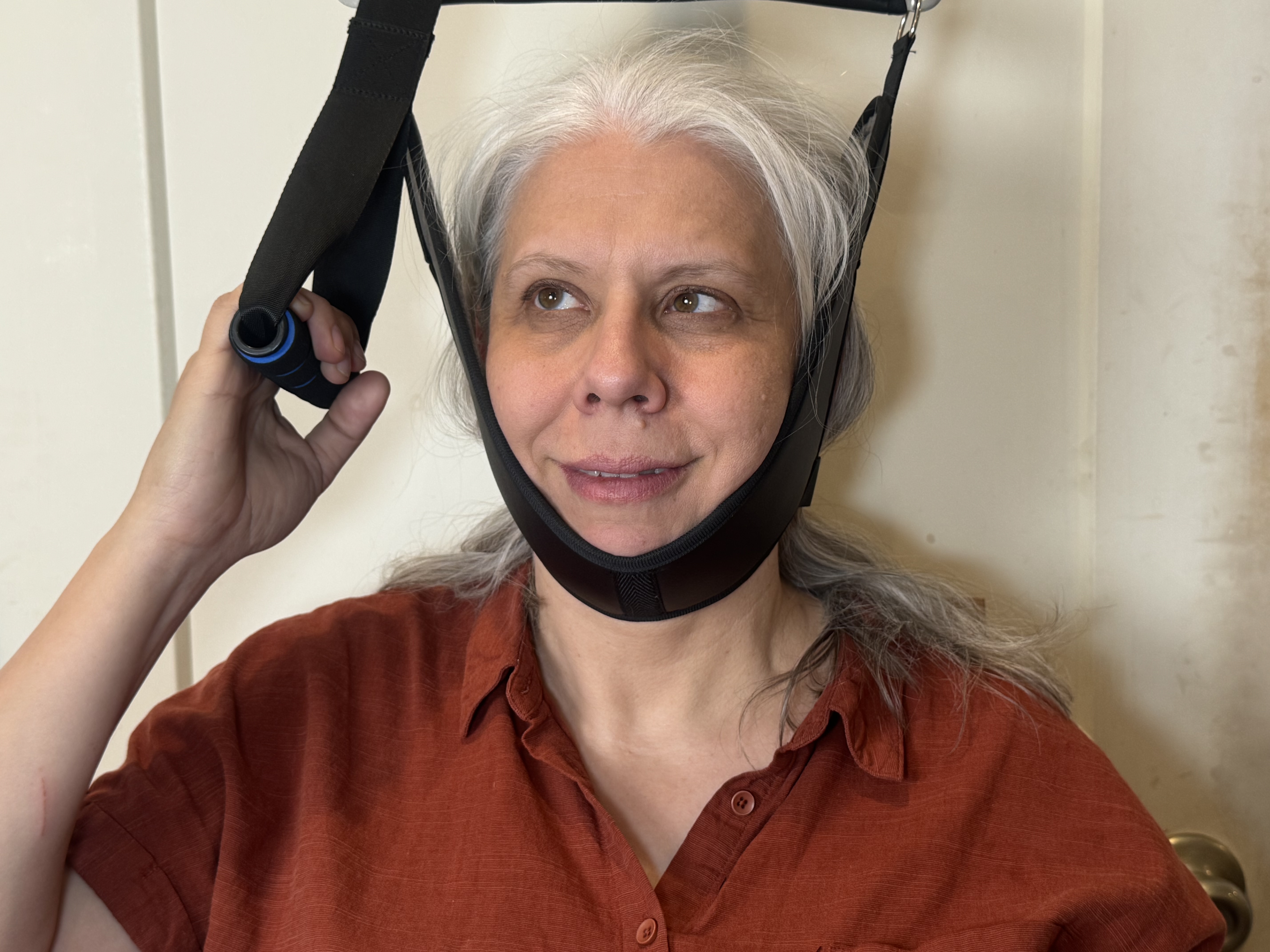
What I found was BlisCure — an over-the-door traction device. AUD $69, and unlike the version I'd pictured, I'd be the one controlling the pull, not a weight doing it to me.
My first thought, honestly, was still skepticism. So I looked into it properly before ordering: exactly how it mounts, how the pulling actually works, and what happens to the one part of this I was genuinely nervous about — my jaw and chin.
What I Actually Checked Before Ordering
Here's what I actually looked into before ordering, because I had one specific fear: I did not want something clamping onto my jaw.
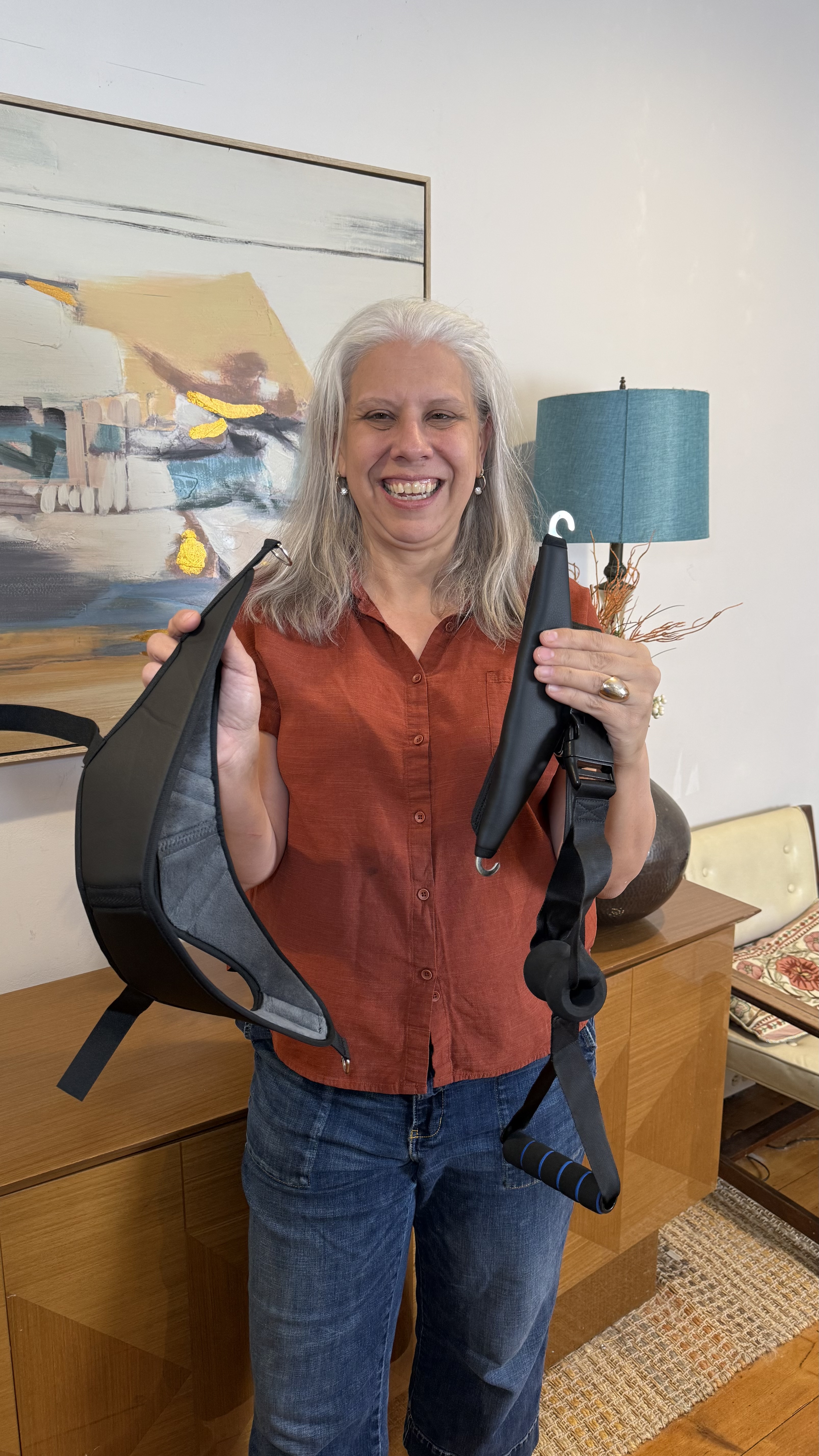
I'd read enough over-door traction reviews to know that's the most common complaint in this whole category — uncomfortable chin pressure, straps that pinch, padding that's an afterthought. So before I ordered, I looked closely at how the cradle actually sits: it supports the back of the head and the chin together while you're seated, and the padding is built to spread that contact rather than dig into one point.
I won't pretend there's zero sensation at the chin — there is some contact there, that's how the device works. But it's meant to be support you can sit comfortably in while you pull, not a pinch point.
How It Actually Works
See enough? Shop BlisCure — AUD $69 →
Includes a free Neck Stretching Guide with every order
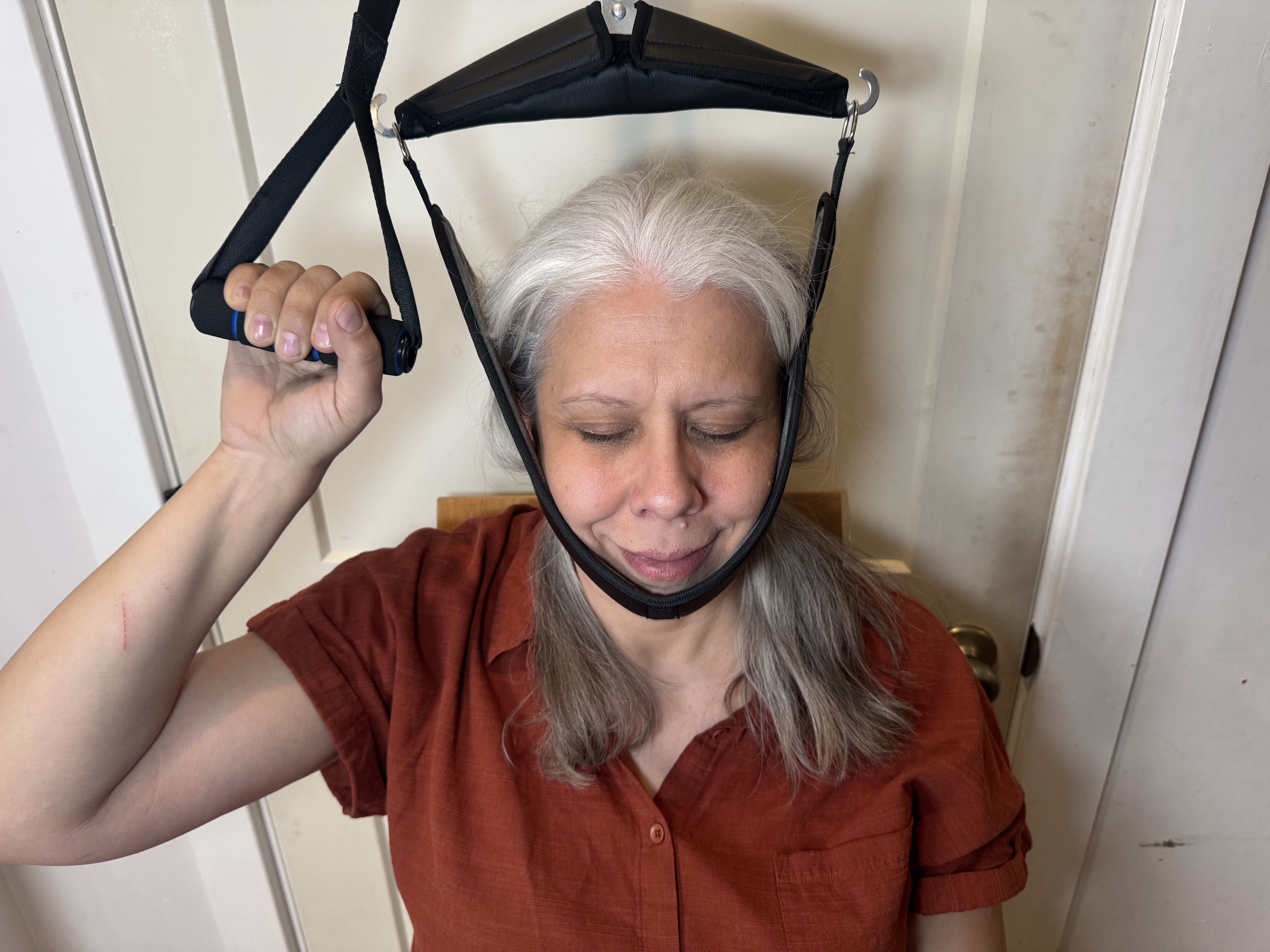
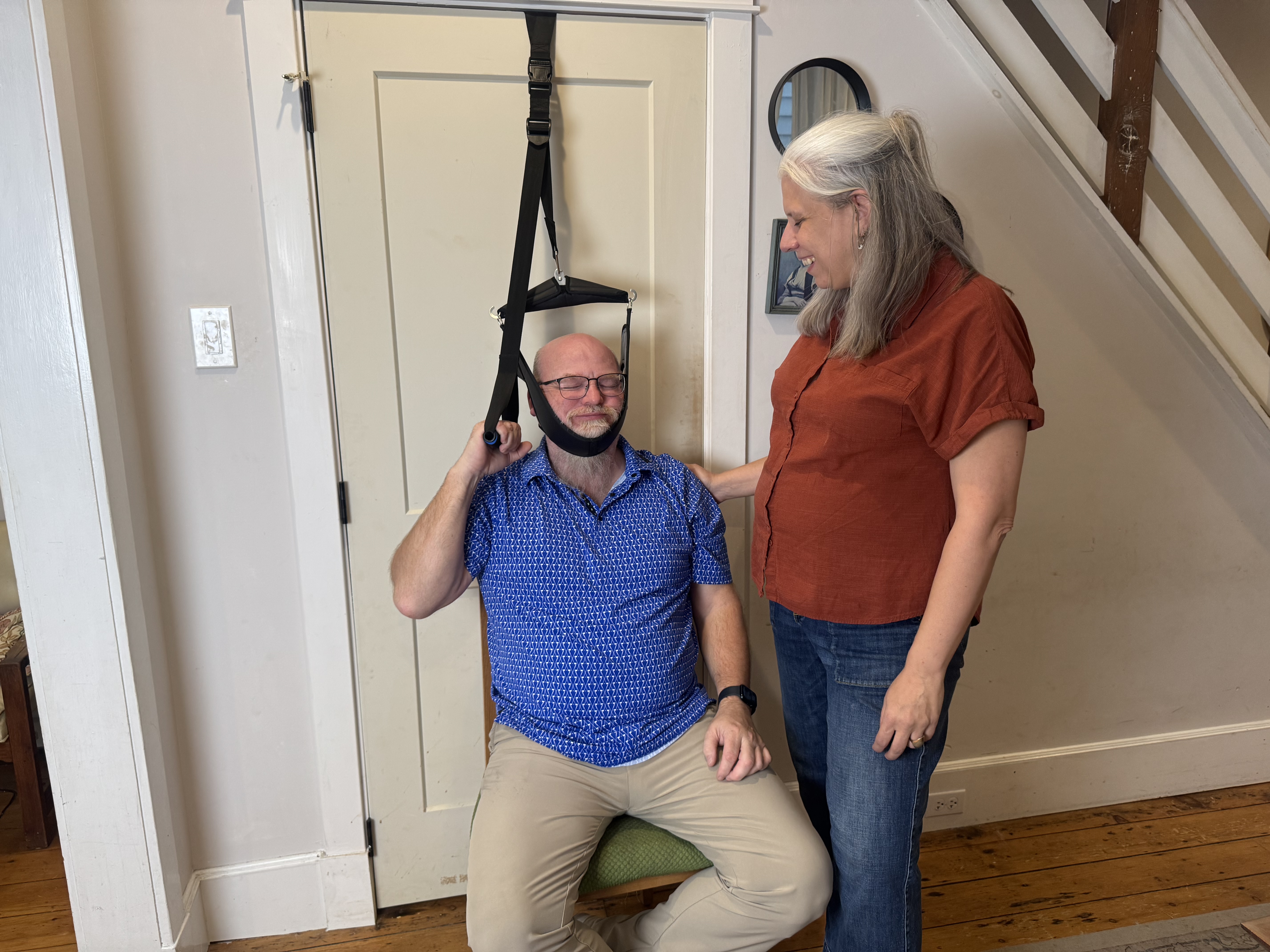
BlisCure anchors over your door with a padded strap. You sit in a chair underneath it, position your head into the cradle, and then pull the handle strap yourself — that pull is what lifts and stretches your neck. There's no fixed weight doing this to you; you're the one creating the lift, at whatever pace you choose.
That's the part that mattered most to me. I'm not hanging there passively while something pulls on my neck. I'm sitting, I'm in control of the strap, and I decide how much I pull and how long I hold it.
Before You Use It: The Part I Actually Appreciated
Before my first session, there was a straightforward rundown of who should check with a doctor first — recent neck injury or surgery, certain existing conditions, anyone unsure whether traction is appropriate for them. It also plainly said: ease into the pull gradually, and if anything feels wrong, ease the strap back down slowly rather than letting go all at once.
I'll be honest, I liked that it didn't oversell this as instant or effortless. It made the rest of what it said feel more trustworthy, not less.
Week by Week
Five minutes, once a day, usually right after work — the exact moment my neck was tightest. Nothing dramatic. But that specific pressure point at the base of my skull noticeably eased within the session itself, most days.
I started doing it consistently rather than "when I remembered." That was the actual shift — not the device, the routine. The tightness was still showing up at my desk, but it wasn't building the same way by end of day.
This is where it stopped feeling like an experiment. I wasn't reaching for my shoulder to roll it every twenty minutes anymore. My coworker — the one with the drawer of stuff that "sort of works" — asked what I was doing differently.
I hadn't fixed my neck. I want to be clear about that, because I'm suspicious of anyone who claims they have. What changed is that I had something to actually do about it the moment it started, instead of white-knuckling through the afternoon and hoping a hot shower would help later.
The Real Test
Long travel day, bad sleep, eight hours in a car the day before a big presentation. Normally that combination means a neck that's locked up by mid-morning and a day spent quietly miserable through client meetings.
Five minutes with BlisCure before I left the hotel room. It didn't erase the last two days — I'm not going to pretend an AUD $69 device undoes two nights of bad sleep and a road trip. But it took the edge off enough that I wasn't distracted by it through the meeting. That was the whole point. Not perfection — just not having to think about it.
What's Actually Behind This, Not Just Marketing
Before fully committing, I did my own due diligence. When you've tried everything like I have, it's not just an AUD $69 purchase — it's a routine you're deciding to build.
- ✓Setup video and Safe-Start Guide included with every order — no guessing on day one
- ✓Free Neck Stretching Guide included with every order
- ✓Door/fit compatibility checklist so you know it'll work before it arrives
- ✓Clear "check with a doctor first" guidance, not buried in fine print
- ✓30-day home trial — genuinely test it before deciding
BlisCure: AUD $69, no recurring cost
Compare —
Massage gun: AUD $90 upfront, relief lasted ~2 hours
New pillow: AUD $40, no effect on daytime tightness
Chiropractic: AUD $75/visit, ongoing — AUD $300+/month at weekly visits
Why I'm Actually Recommending This
I want to be honest about what changed and what didn't.
My neck isn't "fixed." I still sit at a desk too long. I still have days where the tightness shows up by 3pm. What's different is that I'm not just reacting to it anymore — rubbing, rolling my shoulders, hoping it passes. I have five minutes and an actual answer, whenever it starts.
"That's the whole win. Not a cure. Just not being at the mercy of it anymore."
That's a bigger shift than it sounds like. I spent over a year quietly managing this — rearranging my day around it, half-listening in meetings because I was distracted by my own neck. Now I'm not thinking about it nearly as much. Some days I don't think about it at all.
I'm not going to tell you this works for everyone or every neck issue — it doesn't, and anyone who tells you otherwise is selling you something. But if your version of this looks anything like mine — the desk, the same tight spot, the drawer full of stuff that sort of works — it's worth five minutes to actually try.
This article reflects one customer's personal experience and is not a substitute for medical advice. Individual results vary. Consult a healthcare provider before beginning any traction routine, especially if you have a history of neck injury, surgery, or other relevant medical conditions.