One More Row Turned Into Another Hour?
Stitch. Look Up. Rub Your Neck. Repeat.
The problem was never that you don't know how to protect your neck. It's that none of it works after you've already lost track of time.
You Already Know This Feeling
You don't need me to describe it. You know exactly which project had you hunched over the cutting table for an extra hour. You know which side of your neck complains first — usually the same side you always tilt toward the machine, the hoop, the pattern.
You've also already done the responsible things. Raised your cutting table. Adjusted your chair. Better lighting. You tell yourself you'll take a break every 20 minutes, and for the first 20 minutes, you do.
And then you tell yourself: one more row. One more block. Just this seam. And somehow an hour disappears, and the only thing that pulls you out of it is your own neck reminding you how long you've been sitting there.
You're not doing anything wrong. This pattern shows up constantly among people who craft — the absorption, the "just one more" moment, the neck and shoulder ache that shows up only once the project finally lets go of you. This isn't a personal failure of posture. It's just what happens when something you love keeps you somewhere longer than your body planned for.
If you've already fixed your setup and you're still ending sessions rubbing your neck, you're not confused about the problem. You're missing something for after.
The Actual Problem Isn't Your Craft. It's the Loop.
Here's the part that doesn't get said out loud: it's not that your neck gets tight. It's that it keeps becoming tight, session after session, no matter how good your ergonomic setup is.
That's a different problem than it sounds like. Once you see it laid out, it's obvious why "fix your chair" alone hasn't solved it:
Good ergonomics — chair height, project stands, lighting, scheduled breaks — all work on the front end. They reduce how much load builds up during the session. That matters, and it's worth doing. But almost nothing in your current routine does anything for the moment after you finally look up — the part where the tightness has already built and you're just trying to shake it off before the next session starts the same way.
That's the gap. Not "your setup is wrong." Just: nothing you're doing right now is built for after.
The Thing With an Actual Name
Almost everything marketed at post-craft soreness is aimed at the same moment: rub it, stretch it, apply heat, and move on. All genuinely helpful, all temporary.
The thing that's actually built to work on the mechanical side of that tightness — not just soothe it for a few minutes — has a name you've probably heard from a physio more than from a craft blog: traction. Specifically, Controlled At-Home Cervical Traction — a gentle, deliberate stretching force through the neck, done at your own pace, with you controlling how much and how gradually.
It's not massage. It's not heat. It's not a better chair. It's a different physical input — one used in rehab and PT settings for exactly this kind of recurring tightness. Results vary person to person, and it isn't the right fit for every neck condition, but it's aimed at a different part of the loop than anything currently in your after-craft routine.
What This Actually Looks Like
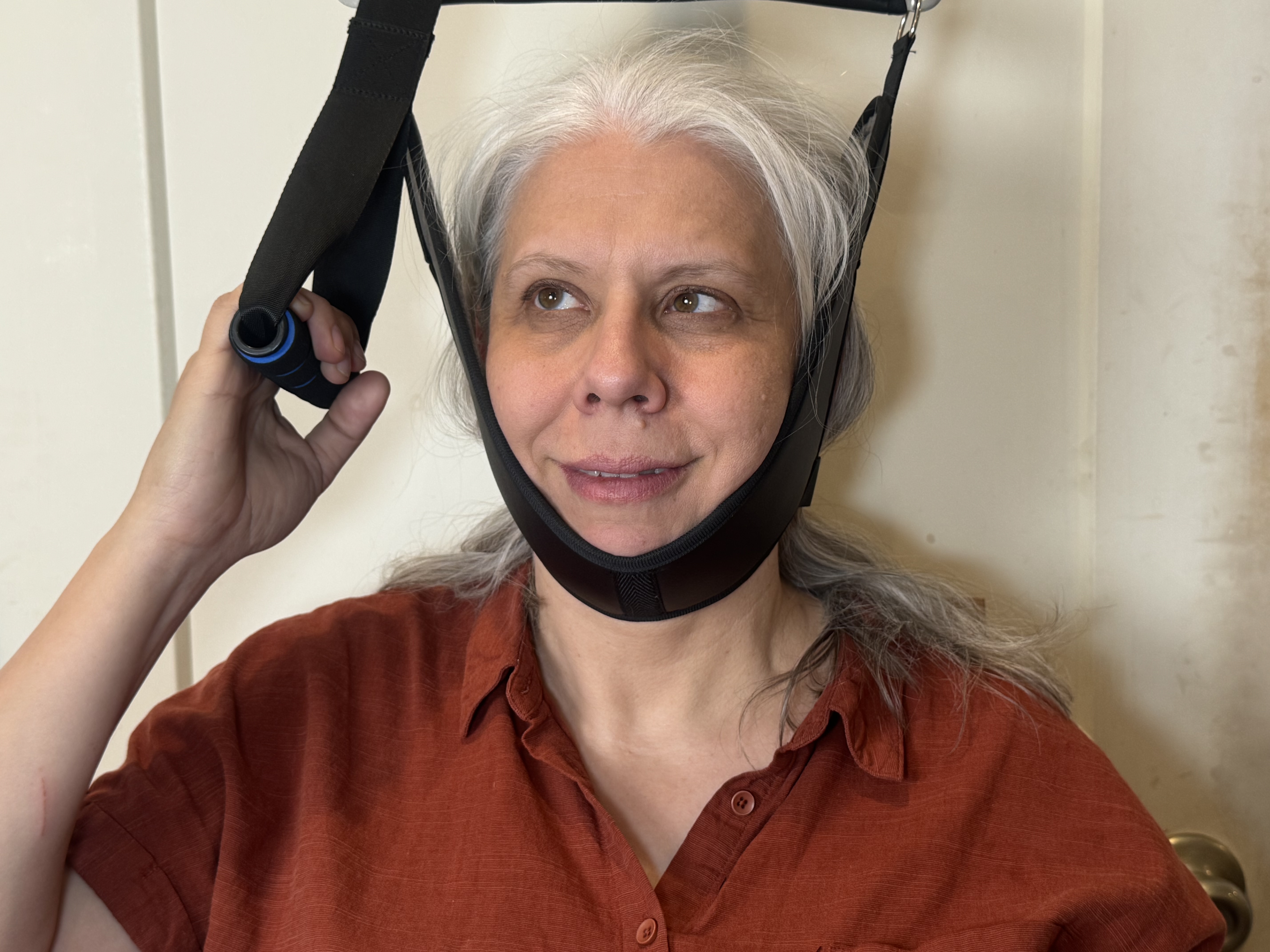
BlisCure is a seated, over-the-door traction device. You anchor the strap over your door, sit in a chair underneath it, and position your head into the padded cradle. From there, you pull a handle strap yourself to create the lift — a slow, deliberate stretch through the neck, not a fixed weight pulling on you the moment you sit down.
You control it the whole time: how far, how gradually, and when to stop. Ease in gently, ease back out if anything feels wrong. When you're done, release and put it away. No permanent setup, no dedicated space, no appointment.
The Part Worth Being Honest About
If you've looked at any over-door traction product before, you already know the most common complaint: something digging into the jaw or chin, awkward straps, padding that feels like an afterthought.
Direct answer, not a dodge: the cradle does make contact at the chin. There's no version of this mechanism that avoids that — that's how the support works while the traction is applied. What's different is that the padding is built to spread that contact across a wider area instead of concentrating it at one point. The difference between "this pinches" and "this supports" usually comes down to exactly that.
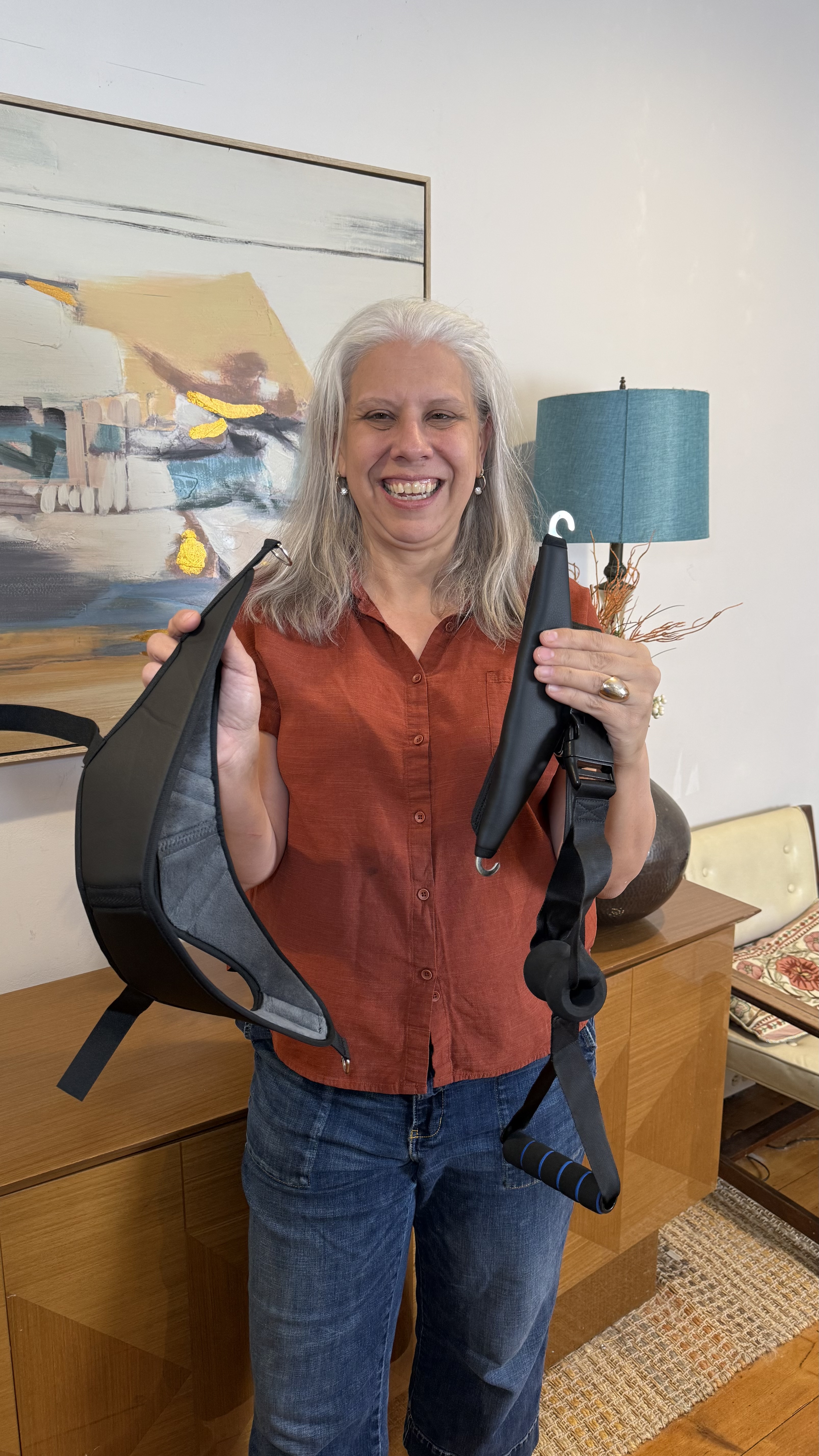
It also comes with a setup video, a door/fit compatibility checklist, and a Safe-Start Guide, so you're not guessing on your first try.
A Few Minutes, Not a New Routine to Maintain
The routine is small on purpose: a few minutes, right after you finally put the project down. Not a program competing with your actual crafting time. Not something you have to remember to do mid-session. Just something available the moment you look up and realize how long you've been at it.
This isn't a promise that BlisCure fixes your neck permanently, or that it replaces good setup habits. Nothing does that, and anyone claiming otherwise is selling you more than they can back up. What it gives you is something to do after the loop resets — instead of just rubbing your neck and hoping tomorrow's session goes better.
Real Reactions, Not Actors
Unscripted first-time reactions from real customers.
Bring The Traction Routine Home
Traction has mostly lived in clinics — not because it has to, but because until recently there wasn't a simple, affordable way to bring it home. That's the actual shift here. Not a new kind of relief. The same kind of mechanism used in rehab settings, just no longer locked behind an appointment — available the same evening you finally put your needle, hoop, or fabric down.
This article reflects general product information. It is not a substitute for medical advice. Individual results vary. Consult a healthcare provider before beginning any traction routine, especially if you have a history of neck injury, surgery, or other relevant medical conditions.