You Already Know the Routine. Here's Why It Never Actually Ends.
Stretch. Rub. Feel Better For a Day. Repeat.
The problem was never that nothing worked. It's that nothing stuck.
You Know This Feeling Already
You don't need me to describe what tight feels like. You've felt it — at your desk by 3pm, in the car after a long drive, first thing in the morning after sleeping wrong. You know the specific spot. You know which side is worse. You've probably rubbed it while reading this sentence.
You've also already tried the obvious things. Stretched. Changed your pillow. Booked a massage. Maybe seen someone professionally. And here's the part that isn't a mystery to you either: some of it helped. For a few hours. Sometimes a day. And then you were right back where you started, doing the same thing again.
If you're reading a fourth or fifth article about neck relief, you're not confused about whether you have a problem. You're tired of solutions that don't hold.
So I'm not going to spend this article convincing you your neck is tight. You know that better than I do. What I want to talk about is something most of what you've already tried never actually touches — and why that's not an accident.
The Actual Problem Isn't Your Neck. It's the Loop.
Here's the thing nobody puts a name on: it's not that your neck is tight. It's that it keeps becoming tight, over and over, no matter what you do about it.
That's a different problem than it sounds like. And once you see it laid out, it's obvious why so much of what you've tried hasn't held:
- A trigger. Hours at a desk, driving, a bad night's sleep — something loads the neck.
- A response. Muscles tighten to compensate. That's the stiffness you feel.
- A temporary fix. You stretch, rub, apply heat, maybe get a massage. It genuinely helps — for a while.
- The trigger returns. Back to the desk. Back to the same position. The tightness rebuilds.
Almost everything marketed at this problem — pillows, massage tools, heat, even a good massage — is aimed at step 3. It interrupts the loop for a few hours. Nothing about it changes step 1 or step 2, which is why the loop just... resets.
That's not a knock on any of those things. A massage does exactly what a massage is built to do. The issue isn't that they're bad tools. It's that they're built to soothe the loop, not interrupt what's actually driving it — the mechanical load sitting in the joint and muscle tissue itself.
Once you see it as a loop instead of a single ache, the real question changes. It's not "what makes my neck feel better." It's: what's actually built to stop the loop from resetting, instead of just making one cycle of it more comfortable?
The Thing With an Actual Name
The honest answer is that almost nothing sold as "neck relief" is built for that. Most of it is built for step 3 — the soothing part — because that's the part that's easy to feel working immediately.
The thing that's actually built to interrupt the mechanical side of the loop has a name, and it's one you've probably heard in a physical therapy office more than in an ad: traction. Specifically, Controlled At-Home Cervical Traction — a way of applying a gentle, deliberate stretching force through the neck, done seated, with you controlling exactly how much and how gradually.
It's not massage. It's not heat. It's not support. It's a completely different physical input — one used in rehab settings for exactly this kind of recurring tightness, with real research behind it, though results vary person to person and it isn't a fit for every neck condition.
That distinction is the whole point. Not "this is stronger than what you've tried." Just: it's aimed at a different part of the loop than anything else in your routine currently is.
What This Actually Looks Like
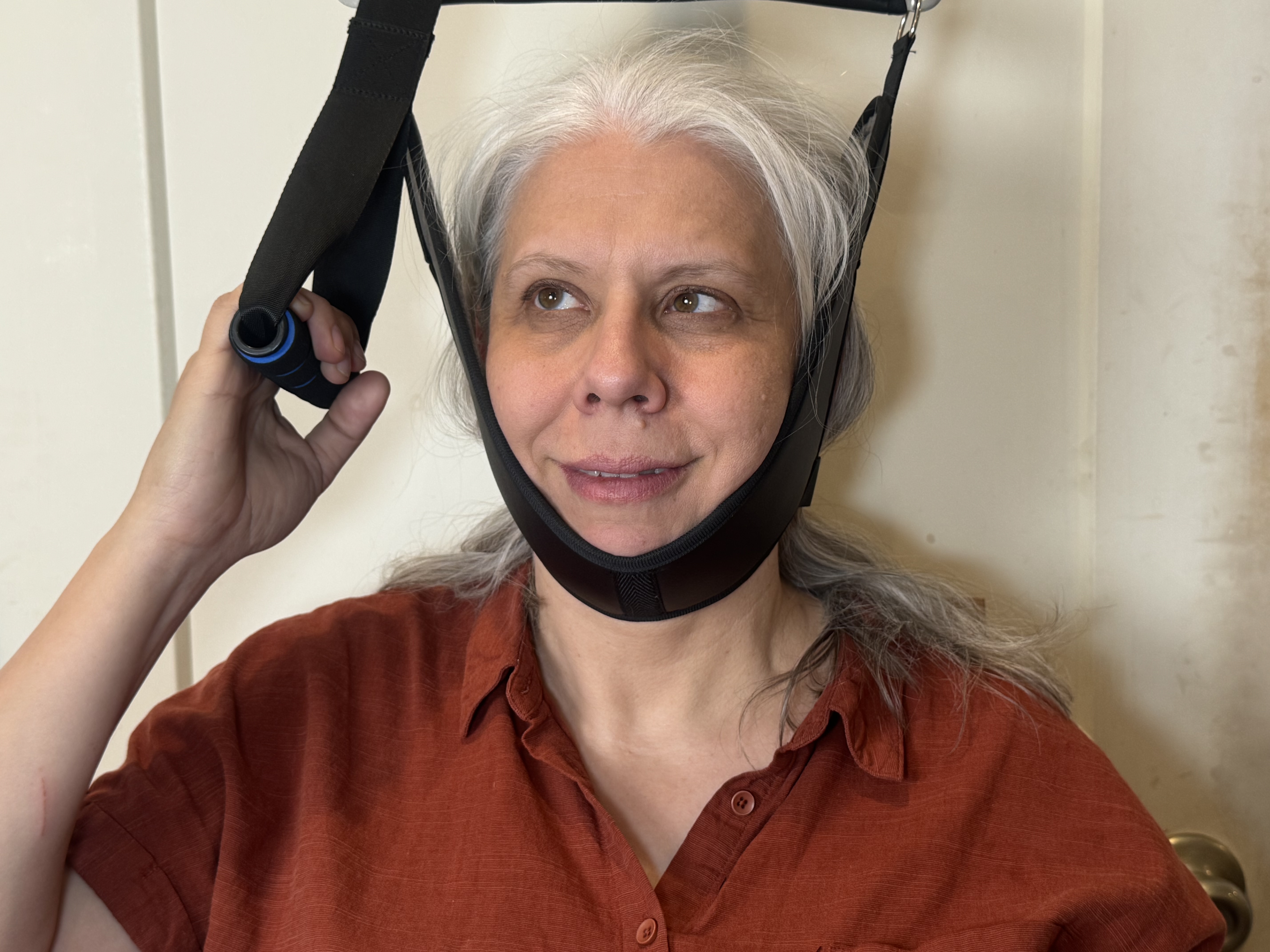
BlisCure is built around that one distinction: it's a seated, over-the-door traction device where you create the pull yourself. You sit in a chair underneath the anchored strap, position your head into the cradle, and pull a handle strap to create the lift — a controlled, deliberate stretch through the neck, not a fixed weight pulling on you the moment you sit down.
That last part matters more than it sounds like it should. The version of "traction" most people picture — something hanging off a door with a weighted bag attached — puts the force outside your control. This doesn't. You decide how far, how gradually, and when to stop. Start low, ease in, ease back out if anything feels wrong. That's not a safety disclaimer bolted on afterward. It's the actual design.
The Part Worth Being Honest About
If you've looked at any over-door traction product before, you already know the most common complaint: something digging into the jaw or chin, uncomfortable headgear, padding that feels like an afterthought.
So here's the direct answer, not a dodge: the cradle does make contact at the chin. There's no version of this mechanism that avoids that entirely — that's how the support works while you're seated and pulling. What's different is that the padding is built to spread that contact across a wider area instead of concentrating it at one point. The difference between "this pinches" and "this supports" usually comes down to exactly that — surface area, not marketing language.
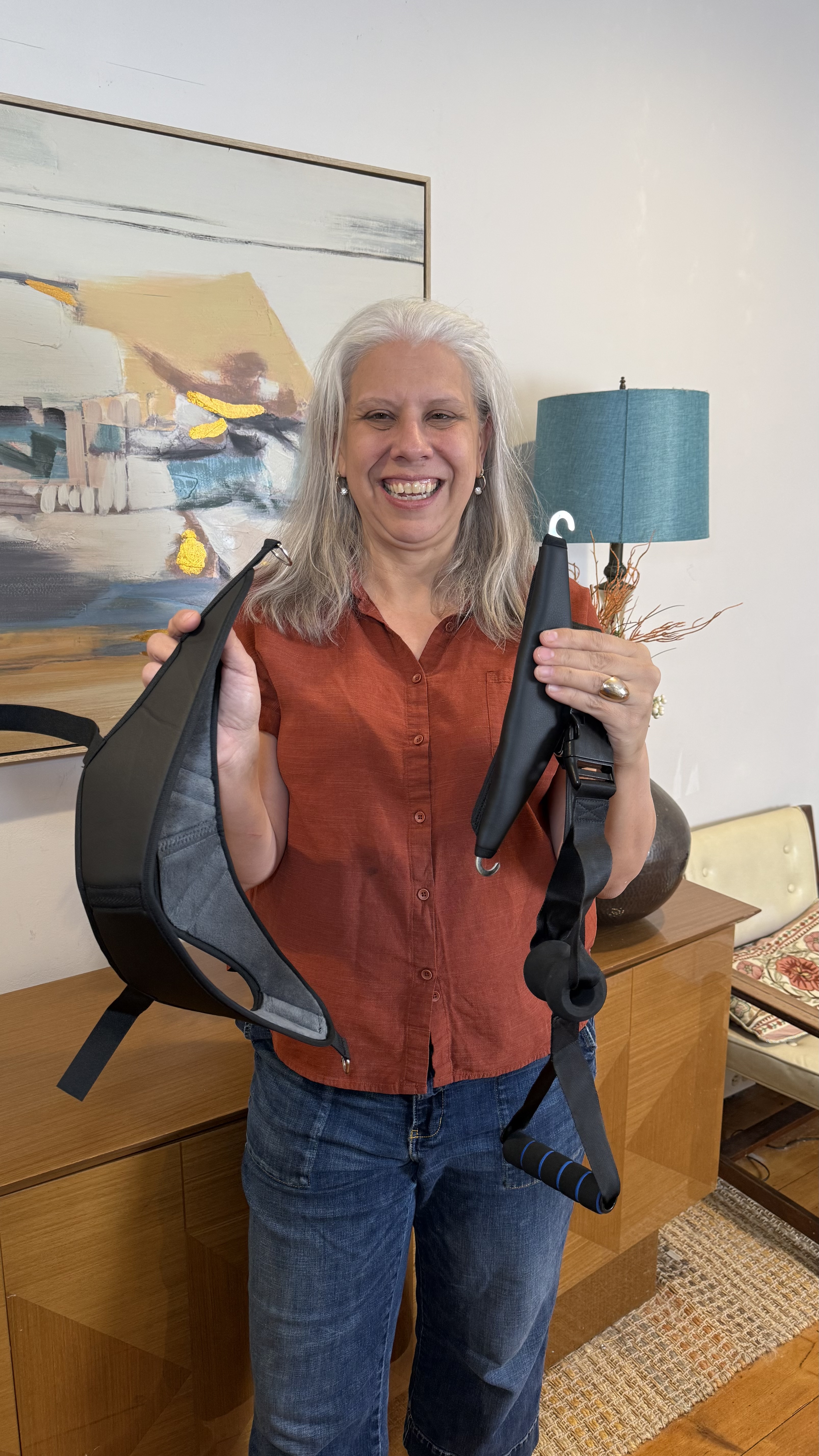
It also comes with a setup video, a door/fit compatibility checklist, and a Safe-Start Guide, because the second most common complaint in this category isn't the device — it's not knowing if you've set it up right. That shouldn't be something you're guessing at on day one.
Five Minutes, Not a Lifestyle Overhaul
The routine itself is small on purpose: about five minutes, once a day, ideally right when the tightness is at its worst — end of a workday, after a long drive. Not a program. Not a commitment that competes with the rest of your life. Just something available at the exact moment the loop usually resets.
That's the actual shift worth naming. Not "this cures your neck" — nothing does, and anyone claiming otherwise is selling you something bigger than they can back up. What changes is that you stop being purely reactive to the loop. You have something to do at the moment it starts, instead of waiting it out and hoping the next massage or the next night's sleep resets things for you.
Real Reactions, Not Actors
Unscripted first-time reactions from real customers.
Bring The Traction Routine Home
Here's the bigger idea underneath all of this: the thing that's actually built to interrupt the loop — real traction — has mostly lived in clinics and physical therapy offices. Not because it has to. Because until recently, there wasn't a controlled, affordable way to bring it home.
That's the actual shift. Not a new kind of relief. The same kind of mechanism that's already used in rehab settings, just no longer locked behind an appointment. You don't need to leave your house, book a slot, or wait for the next available time to access it. It's there on the day the loop resets — which, if you're honest with yourself, is most days.
This article reflects general product information. It is not a substitute for medical advice. Individual results vary. Consult a healthcare provider before beginning any traction routine, especially if you have a history of neck injury, surgery, or other relevant medical conditions.